Showing posts with label Ukraine. Show all posts

Thursday, August 12, 2010

Top posts about Ukraine

In case I've picked up any readers over the past year, I thought I'd give a handy list of what I consider my more interesting posts on my year here in Ukraine. 

In October I tagged along on a Fulbright trip to Chernobyl and surrounding villages.

In November I visited an old Soviet missile base and got to "push the button."

Running out of good English language books by December, I posted this self-indulgent ode to libraries and personal collections.

In January and February, I participated as an international observer in the Ukrainian presidential elections.

Later in the month, I met a great family in the predominately Crimean Tatar village of Sari-Bash and took a look at their family heirlooms.

March brought me news of Super Alica - my new favorite Russian/Tatar pop singer.  Super good.

By April I was craving shashlik.

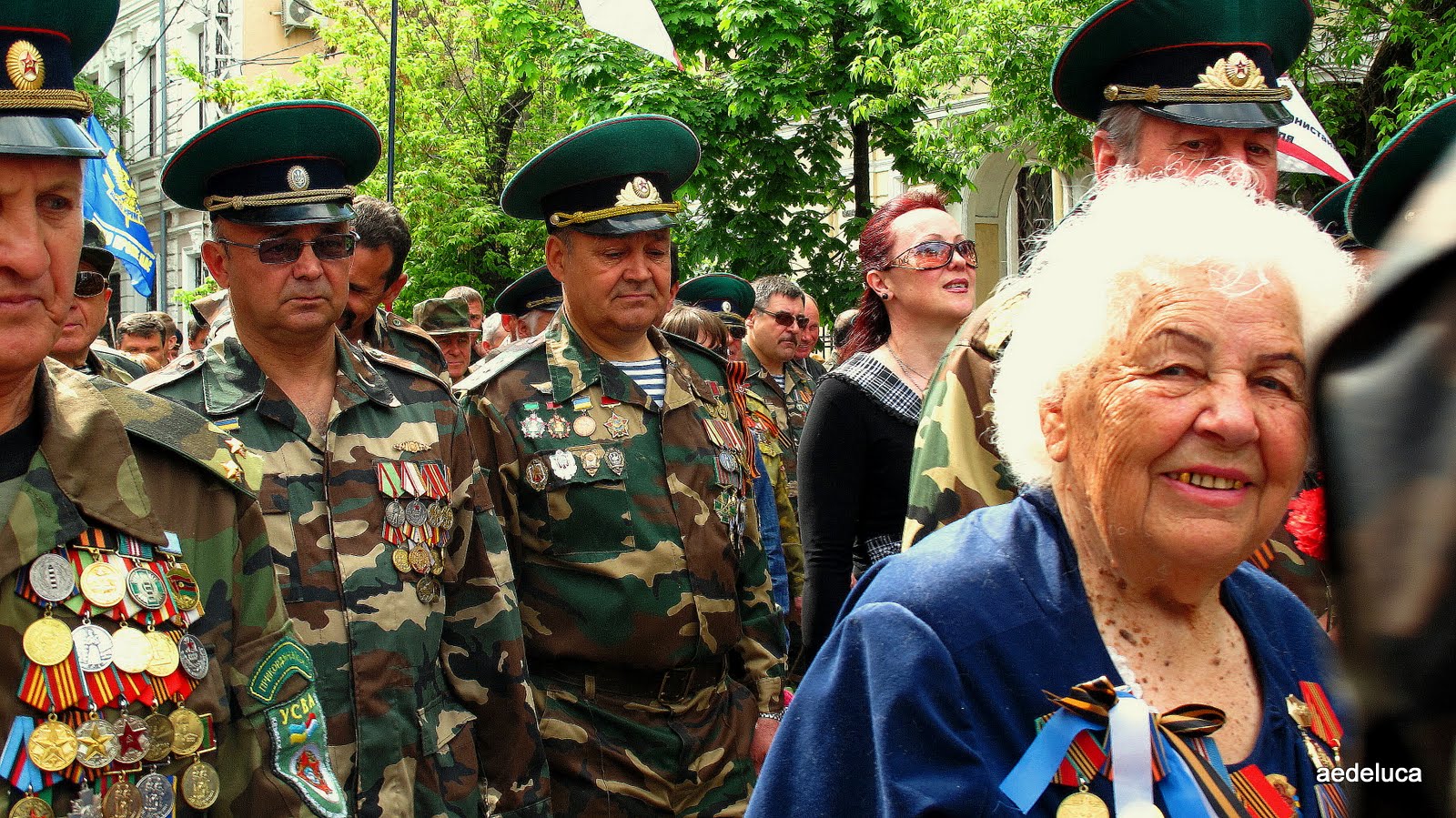
In May, I hung out at the Victory Day parade in Simferopol, Crimea.

As the weather heated up in June, I went on a quest for Gagarin in Kharkiv, a major city in eastern Ukraine.

Since July, I've been a bit lax with my posting schedule...but you can expect some good posts in the weeks to come!  I haven't written much here about my project, but if you are curious how that is getting along, you can always e-mail me.

Monday, August 9, 2010

Faces in the rocks at Karadag Nature Reserve

Can you see the Marx and Engels in the first photo, or the elephant in the second? 


Wednesday, July 14, 2010

Boy about town

I like these two stencils I recently saw in Simferopol, one along the Salgir River and one on the top of Pushkin Street.


Thursday, July 8, 2010

Hard selling the hidden gems

Was using this as a bookmark in a book I apparently gave up on in Lviv last fall:


Apparently I got a bit distracted by the coffee and chocolate and cafes, which is exactly what Lviv's PR guys promised me I would.  I don't remember anything from the page I was reading but I do remember this little "free info" advertisement card.  It reads:

"FOLK ART MARKET.  Would definitely recommend coming here!  A lovely market with lots of colorful folk jackets and clothes.  Painted Easter eggs were fantastic."

This does indeed leave us with the chicken or the painted egg question.  Which came first, this meticulously spell checked ad, or oddly worded recommendation that sounds like it came out of a Japanese-produced English-language guidebook?

It reminded me of something I found in a made-for-tourists Lviv In Your Pocket, a sort of advertment/listing/recommendation that seemed a bit off (emphasis mine):

Jewish Pid Zolotoiu Rozoyu C-4, Staroyevreis‘ka 48, near the Synagogue, tel. (+380) 32 236 75 53. This Jewish restaurant is located downhill from the ruins of the Golden Rose Synagogue, the oldest synagogue in Ukraine. The outdoor seating is exceptional and helps make this a dining hotspot. Here are a few things to know before you go. 1. There are no prices listed on the menu as you are expected to barter. Being a foreigner, they‘re likely to just quote you a reasonable price. 2. For the right price you can secretly arrange to have your waiter smuggle in some pork dishes. How kosher is this place? 3. They offer a fantastic selection of salads, vegetable dishes, Galician desserts and traditional Jewish breads. 4. For a taste of Lviv you‘ll never forget, try the homemade vodka. QOpen 11:00 - 01:00. 


As the "In Your Pocket" guides are locally produced, it is not a leap to assume the restaurant itself wrote this listing.  Is my gut feeling right, that it is a bit odd to advertise that your restaurant is up for bartering and you can bribe your waiter to "smuggle in some pork dishes," or is this what today's backpacker through Eastern Europe wants to read?  I suppose so - I remember having a laugh for several days at Bucharest's "In Your Pocket," which boldly declares something to the effect of: "If you have arrived in Bucharest by bus or coach, then something is seriously wrong with your life and no guidebook can ever remedy it."

Speaking of "bartering," here is the back of the ad for the above market:


"It's worth having a bit of a haggle as the first asking price may be a mischievous roll of the dice from the point of view of the seller."  Yes, Lviv, this is what us backpackers deserve for "pottering about" and exoticising eastern Europe, raging on in bars and hostels during our travels bragging about our "authentic experiences," which include moonshine, broken down transport and great bargains - "if you know how to haggle."  I just hope Central Asia doesn't start trying to somehow market "mystery meat" before the next time I get there.

Thursday, July 1, 2010

Seen around


I've seen this Black Sea map on beach bags and coffee mugs here in Crimea- Austin said they were around last year as well.  You can see that Abkhazia is marked as a separate nation...

Monday, June 28, 2010

Kharkiv #3 - hanging out, metro and street art

Last Kharkiv post.  This is from the early June trip.

Kharkiv is a surprisingly good city to chill in. Daniel and I wandered around, stopping here and there to read a book and chattering on about this or that.  We hung out in a few of the city's many parks and a coffee shop called "Coffee Life" that is the closest thing to Starbucks I've seen in Ukraine (btw, there is a Gloria Jean's in Kyiv).  Counter service and a non-smoking section (Gloria Jean's doesn't have counter service).  It was later confirmed that it is certainly the local Starbucks equivalent when the very cool locals we were hanging out with made fun of us for going there (Gloria Jean's isn't very cool either). 


Although nowhere near as good as the art in the Moscow metro (not that I've seen it), the Kharkiv metro has some interesting stuff going on.  Even better, it isn't that crowded, and you can take photos, unlike in Moscow.  A guy I know apparently went to every metro station in Moscow just to see all the designs, which some people think is weird, but I think is a great Moscow-on-a-shoestring plan, as it seems that for the average backpacker a metro token is about all that is affordable.  If you'd like to see a collection of photos from the various Kharkiv metro stations that borders on an obsessive compulsion, click here.  And of course there is the post I just made about the Gagarin station if you'd missed it.

Here are some shots from the Kharkiv metro - this station is very "meet George Jetson."


More street art than I had expected.  There was an alley of murals sponsored by Caparol which was quite interesting, one of my favorite parts being this photo:


which is a boy playing with this Gazprom building (one of the symbols of Kharkiv, Marina told me) as if it were a lego set:


And here with Lenin, because we can:


Two more from the mural alley:


This next one was near a courtyard with some similar work.  Slipping through the gate, we were immediately tracked down by an on-guard babushka.  "What are you doing?"  "Looking at the paintings."  "Look from the other side of the gate."  Ok.


"Every window is a door" - it sounds philosophical, but it was on an abandoned building and the only way in was the broken windows.  Ta ta!

Friday, June 18, 2010

Kharkiv #1 - Fun in the city


Daniel, a friend I studied Russian with in Bishkek, Kyrgyzstan last year, was coming through Ukraine last week and came through Crimea.  He convinced me to accompany him on a short trip to the East of Ukraine, which began in our minds as  few days hitting all the highlights of the area, but in the end became a few days in Kharkiv.


Kharkiv's Shevchenko statue.  While searching Google for the Wikipedia link, I was surprised to find that Ukraine's famous footballer, Andriy Shevchenko, comes out on top of poor Taras...they have too much power I tell you...too much power. 


We stayed with Marina, a really awesome woman we met on couchsurfing.  Although she worked during the day, she made sure that both nights of our stay we had a good time.  We met with her friends and went on late night walks around the city.  She had so much to show us that it wasn't until right before we left that we had a chance to take her out to dinner, which we attempted to do from the first night.

Of course, the best thing to do in any city is walk around and get to know it with a local.  But other than that?  Here's my list for Kharkiv:

1.  The Kanatnaya Doroga - The winged road!  You'd think it spelled "Soviet Death Trap" as my aunt Grace once called this contraption, but that's what made it so cool.  It is actually not just for entertainment, but a real mode of transportation, taking you over forests and wetlands to another district of Kharkiv.  Click on the video for the sound effects.


2.  Take a look at the Blahoveshchensky Cathedral, which has some pretty cool looking red and cream stripes


3.  Walk around looking at the city's architecture, which is pretty sweet, with quite a few pre-Soviet buildings.


4.  A walk around the central market, but that's a given in any town.


Next up - the Kharkiv Metro, Gagarin fever and street art

Wednesday, June 9, 2010

a nation of readers?


I'm always on the lookout for a good map to send to Strange Maps, and this one (a map of Ukraine made from a picture of a bookcase) has been on the side of tent book markets throughout the city for a few weeks now.  Probably not strange enough for Strange Maps, but certainly cool enough to bother my readers with.

Monday, May 10, 2010

65 лет победы


Today marks the 65th anniversary of Soviet victory in World War II, or the Great Patriotic War as it is called in Russian.  I've previously attempted to scratch the surface of the rich topic of historical memory in Ukraine, and Victory Day is another example of how quite a few emotions, perspectives and versions of history can collide, this time on one of Ukraine's most important holidays.  For a great introduction, listen to this short (six minute) piece broadcasted on NPR today, with Myron Stachiw, t
he Director of Fulbright in Ukraine, featured in the second half : "World War II Holiday Brings Ukrainian Nightmares."  


My weekend began in Sovietskii, a town where I am conducting research for my project and have also made some great friends.  After attending an event at a local school on Saturday, a friend of mine invited me over to her mother's and grandfather's house for tea before I headed back for Simferopol.  They were preparing for her grandfather's 86th birthday party, which happens to occur on Victory Day.  He himself is a veteran of the war.  Like all Crimean Tatars who fought during the war, he was deported to Central Asia despite his service.  Ironically, Victory Day comes little more than a week before May 18th, the anniversary of this deportation which is solemnly remembered every year.

He showed me a medal he had been sent this year.  It read "65 лет победы!"  65 years of victory!  He treated it like a joke and said they gave it to him for his old age.  "They gave me a medal after the war, too," he told me.  "But I told them I didn't want it, I didn't care about it.  My children were young then.  I told them to give me a cow so I would have some way to feed my children."  The family told me they weren't very interested in Victory Day.

He talked about his time in the army and the places he had been.  My friend took my camera and told him, you've been in France, you've been in Germany, now in this picture you'll be in America as well!


As I was leaving Sovietskii, I purchased a phone card from the kiosk by the bus station.  The woman asked me where I was from and what I thought of Ukraine.  I give the wide-eyed American answer I always give - "It is a beautiful country." (I always give this answer because regardless of where I am, it is always true.  At the risk of being corn-ball, this is a beautiful planet we live on.)

 "You think it is beautiful?!" she asked?  

"Yes," I said, continuing my wide-eyed American role, which is easier than engaging in an in depth conversation through a tiny kiosk window, "It is a very beautiful country and the people are very kind..."

"You mean the people have a lot of patience, and they put up with a lot" she said sadly with a slight smile, giving me the standard Russian wish of happiness as I headed for my bus.  Crimea is perhaps one of the few places I've travelled where simply stating that the country is beautiful and the people are nice is not a sure ticket to a smile and a knowing nod.  I am beginning to think that Crimeans want visitors to understand and acknowledge what they have seen and lived through.  Or perhaps that is true everywhere, and the people I've met were simply unimpressed by my heavily accented platitudes.


I've been thinking about the patience and endured hardships of Ukrainians all week as I've seen the city prepare for the Victory Day celebrations.  This morning I attended the Simferopol parade my friend Adrianne, a Peace Corps volunteer based here.  Many people I know travelled to Sevastopol to see the parade there with the recent renewal of the Black Sea Fleet, it certainly must have been an interesting atmosphere.  Yet I don't regret staying in Simferopol - it was nice to be able to walk around the city streets I'm now comfortable with, and even spot a few friends and acquaintances throughout the day.  Feeling the mood of the city, I had that wish to see the celebrations here throughout the years.  When the streets were cleaner, the city greener.  The first years when those deported were allowed to resettle in Crimea.  In the first years of an independent Ukraine.


Before the parade started, I met up with a young friend of mine, let's call him Sergei, who was marching with the Party of Regions, the party of President Yanukovich.  Although Sergei didn't vote in the previous elections and is completely disillusioned with politics, he decided to march in the parade because a friend of his works for the party, and was paid for the number of marchers he was able to organize.  I found Sergei absorbed in his mp3 player holding one of the giant Party of Regions blue flags by the tank near Parliament, and took some pictures of him.  "Don't post these on Facebook, please!" he asked, as I tried to get him to smile.  I said goodbye to meet with with a friend, and he waved as he put his headphones back on.


A few months ago I had a Russian language test over the telephone as part of my grant requirements, and it took me awhile to convince the Russian speaker calling from the U.S. that yes, it is indeed possible that I am living in Crimea but yet have never been to Russia.  Some other foreigners I know living in Ukraine, but not Crimea, sometimes ask me what Crimea is like.  They want to know if it is true that it is really just a "beached" part of Russia, Russian-speaking, leaning and yearning.  There is certainly no shortage of graffiti boldly declaring "Крым - это Россия!" Crimea is Russia! This is more of a topic for a dissertation than a blog post, so I'll keep it short.  I believe that this pro-Russian identity is one strong influence on the peninsula, but certainly not the only one.  That being said, many of those marching in the parade held up signs or repeated chants asserting a Russian or Soviet identity.


This woman was chanting "RUSS-I-A!  RUSS-I-A!"  Many in the crowd were cheering.  Behind her group came were representatives from the Democratic Party of Ukraine.  As they passed by, many of the onlookers began to boo.


Here is my Picasa album of pictures from the day.  This is one of my favorite pictures:

Tuesday, May 4, 2010

Remembering Ataturk

After my post about Lenin statues, Austin posted his version, which really is a good bit cooler:


On my recent trip to Turkey, I spent a lot of time thinking about the differences between Turkey and Ukraine.  It takes only an hour and twenty minutes to fly over the Black Sea to Istanbul from Simferopol, but quite a bit longer to adjust to the differences between the two spaces.  Here are some children playing around the Ataturk statue in Fethiye.


Monday, May 3, 2010

chaos in kyiv


A bit late on this, but wanted to share this great photo from the Ukrainian parliamentary chaos of last week, credited as Sergei Supinsky/AFP in the Wall Street Journal's weekly photo round-up

Friday, February 5, 2010

Bizim prezidentimiz

 According to a statement by the Mejlis, or Crimean Tatar Parliment, most Crimean Tatars voted for Timoshenko in the first round of the election, then followed by Tigipko, Yushenko, Yatseniuk and Hrytsenko.  The Mejlis voted to support Timoshenko for this round.  


Given that there are around 270,000 Crimean Tatars living in Crimea, it is an important voting block, and one that Yanukovich seems to be not to successful with.


In an attempt to capture some of these votes from Timoshenko, the Yanukovich campaign has apparently printed 70,000 leaflets in Crimean Tatar for distribution in Crimea.  While mud-slinging is certainly nothing new or unique to this presidential election, I was a bit surprised when I read this leaflet online (yes, unfortunately online!  I've yet to get my hands on one). 

Here's a photo of the leaflet from the above news story, and then my partial translation:


DEAR VOTERS!

On February 7th, the 2nd tour of the presidential election will take place.
We will decide who to vote for, Victor Yanukovich or Yulia Timoshenko.  
Victor Yanukovich is a very experienced politician and leader.
...
Yulia Timoshenko is a politician who does not fulfill her promises, and is connected with the crisis and lies.  
To vote for her is to bring harm upon yourself.
With her politics, and under her care, Ukraine will be destroyed.
With her, Ukraine sunk into debt.  Each newborn is $1,000 in debt to foreign creditors.


Yanukovich          and       Timoshenko
This is good              and        evil.
This is brightness    and       darkness


Yanukovich is the only candidate who will save us!


YANUKOVICH - OUR PRESIDENT!


The Yanukovich campaign also published some materials in Crimean Tatar for the first round.  The Yanukovich symbol, which has his name and the words "Our President - 2010" superimposed over a map of Ukraine, here reads "Bizim prezident" in Crimean Tatar instead of the "Nash prezident" usually seen in Russian.  Ukrainia dlya lyudei (Ukraine for the people) has become Ukraina halk ichiun.

This is an interesting move.  There are very few Crimean Tatars who cannot read Russian, so printing pamphlets in Crimean Tatar is not an attempt to reach out to voters who haven't been exposed to advertisements.  In fact the NR2 article indicates that many Crimean Tatars are annoyed with the publications since many cannot read the language.  

Thursday, February 4, 2010

Bandera, World War II, Heros, and National Memory

This fall I attended a conference on World War II (or the Great Patriotic War, as it is called here) and memory in Kyiv.  As you may remember form my post, I enjoyed it but didn't have the background knowledge to really appreciate it.  After some time in living in Kyiv and then Simferopol, however, I would love to have the chance to attend another conference of the same topic.


On January 20th, President Yushenko controversially declared Stephan Bandera, a leader of the Ukrainian national movement in the 30's and 40's, a national hero.  For many Ukrainians, especially in Kyiv and western Ukraine, Bandera is a national hero.  For many Ukrainians in eastern and southern Ukraine (many of whom identify as Russian), however, he is a villain and Nazi collaborator.   Pointing out the news story about Yushenko's declaration, my Russian teacher refused to call him by his last name, Bandera, but instead referred to him as бандит (bandit), or mobster.

Above is the paper that my Russian teacher brought for our lesson, and the front page is an excellent example of competing interpretations of history in Ukraine.  On the right side of the article is a statue of Bandera that recently was built in Kyiv, in the last year I believe (anyone know where exactly?).  On the left side is a memorial in front of the old movie theatre in the center of Simferopol.  The etching on the memorial reads
В память о жертвах советского народа, павших от рук пособиников фашистов - вояк ОУН-УПА и других коллаборационистов.
(In memory of the victims of the Soviet people who died at the hands of those aiding the Nazis - OUN (ed: Organization of Ukrainian Nationalists) - UPA (ed: Ukrainian Insurgent Army) fighters and other collaborators.)

A lawyer from Donetsk (a large city in Eastern Ukraine) has filed a lawsuit against Yushenko, and a parliamentarian in Sevastopol burned his Ukrainian passport in protest.  When I observed the first round of election in Sevastopol on the 17th, I saw that many residents already used a Russian or Soviet passport cover for their Ukrainian passports.  The MP was quoted as saying: "I think my next passport will not be Ukrainian."  In Moscow, the youth group Nashi protested in front of the Ukrainian embassy, promising to send Yushenko, among other things he would need upon retirement, an enema.  Moscow is upset that the U.S. State Department has been silent on the issue.

The Ukrainian Canadian Congress praised the declaration and called for changes in Canadian law to recognize members of the OUN-UPA as Canadian War Veterans.

But it is not only the tired East/West divide coming out in this debate.  Many in Ukraine's Jewish community are also upset about the declaration:


Ukraine's chief rabbi, Moshe Reuven Asman, and the U.S.-based Simon Wiesenthal Center both howled in protest, with the Wiesenthal Center expressing its "deepest revulsion" and accusing Bandera of being a Nazi collaborator whose followers killed thousands of Ukrainian Jews. (The Vancouver Sun)
Asman will also reject another national award in protest of Yushenko's declaration.

And how does such a controversial move play into the elections?  Apparently in Lviv, a statue of Bandera is being guarded surrounding rumours that either Yanukovich's party will destroy the statue in protest, or Tymoshenko's party will do the same to blame in on her opponent.

Wednesday, January 20, 2010

First Round


This past week I volunteered as an election observer in the first round of this year's presidential elections with the Ukrainian Congress Committee of America. It was quite an experience, and I certainly don't regret it. I was told that I was free to post pictures and experiences in my personal blog, but will keep my comments limited here because somehow it seems wrong that an independent observer could publish their personal opinions about the election. Feel free to email me if you are curious about my experience and I'll send notes I kept that day, and also some more pictures.

Of course most importantly -observer missions in the country commented that the election was held in accordance to international standards. As expected, neither candidate received a majority of the vote, necessitating a runoff between Yanukovych and Tymoshenko on February 7th.

Some articles about the first round for those interested:

Elections in Ukraine signal important turn on the road to democracy - Christian Science Monitor

Ukraine Elections Go to Russian-Flavoured Runoff – Fears Abound for Crimean Tatar Population - Underrepresented Nations and Peoples Organization

Viktor Yushchenko's legacy for Ukraine? Smiling people - Times Online

Ukraine presidential vote headed to runoff - LA Times

Russia ends freeze in ties with Ukraine after election - AFP

Elections in Ukraine - Calm before Storm? - Ria Novosti

Monday, December 28, 2009

Death and the Penguin, and the Kyiv Zoo


My mom and Heidi are visiting for winter break, and we spent last week in Kyiv and Lviv. With lots of travel time for reading, Heidi (above!) and I both just finished the English translation of the wonderful Death and the Penguin by Andrey Kurkov, who uses satire, dark humor and a little bit of the absurd in writing about today's Ukraine. Death and the Penguin is the first of Kurkov's novels featuring Viktor and his pet penguin Misha, purchased from the Kyiv Zoo when it was downsizing its collection to meet a post-Soviet budget.

In one chapter, Viktor takes the daughter of a colleague to the zoo.

Not many people were about. Following a sign saying TIGERS, he led Sonya along a snow-covered path past an enclosure with a large drawing of a zebra and a stencilled description of its life and habits.
"Where," asked Sonya, looking around, "are the animals?"
"Further on," he said encouragingly.
They passed more empty enclosures with boards descriptive of recent inmates, and came to a roofed-in area.
Here, behind thick iron bars, sat two tigers, a lion, a wolf, and other predators. At the entrance there was a notice:
FEED ONLY WITH FRESH MEAT AND BREAD
Neither of which they had.
They walked along the cages, stopping briefly at each.
"Where," asked Sonya, "are the penguins?"
. . .
Walking on, they came to an empty sunken enclosure with railings around it and a frozen lake in the middle. A board depicting penguins hung above the railings.
"Well, as you can see, there aren't any here," said Viktor.
"A pity," sighed Sonya. "We could have brought Misha to make friends with the others."
"Except, as you can see, there aren't any others," he repeated, stoppping down to her.
"What does still live here?" she asked.

As the book was written 10 years ago, it was therefore a bit disheartening (but perhaps not too surprising) to then find the following article on the Kyiv Zoo in the New York Times this week:
The Kiev Zoo, it seems, has seen better days. Ukraine’s government is in disarray and the political discord has been unrelenting — and, yes, now even the lions and tigers and bears have been drawn in.

The zoo was expelled from the European Association of Zoos and Aquaria in 2007 over poor conditions and mistreatment of animals. Advocates and former workers maintained that a giraffe and other animals died from the zoo’s ineptitude, and that money was siphoned from the zoo’s budget through corrupt schemes.

The zoo’s director was dismissed last year by Kiev’s eccentric mayor, Leonid M. Chernovetsky, after failing to find a mate for an elephant — or so Mr. Chernovetsky said. The new director has stirred an uproar among the staff for her supposedly tyrannical ways, and in October, a brawl erupted among workers during a celebration of the zoo’s centennial.